Nicolas Veas Yanez

Teledentistry – Frequently Asked Questions

Teledentistry – Frequently Asked Questions

These FAQs were collected from a recent webinar on Telehealth & COVID-19 presented by the Herman Ostrow School of Dentistry with Dr. Glenn Clark, Professor Linda Brookman, Dr. Kamal Aleryani, and Dr. Steven Richeimer. What is Teledentistry in 2020? “Teledentistry”...

How to Teach Online Courses Effectively

How to Teach Online Courses Effectively

I recommend five things that you should consider using if you want to teach interactively: focused lectures, interactive teaching, supplementation, guided and structured discovery, and rewards (F.I.S.G.R.) 1. Focused, Short, Up-to-Date Lectures The first letter is “F”...

Oral Motor Disorders: Hemi-facial Spasms

Oral Motor Disorders: Hemi-facial Spasms

Secondary Masticatory Muscle Spasm Occasionally the jaw closers or jaw openers can develop a continuous strong spastic activity which if sustained for a long period of time, will actually produce contracture with substantial shortening of the muscle. Often this...

Understanding Oral Motor Disorders: Synkinesis

Understanding Oral Motor Disorders: Synkinesis

Synkinesis A variation of hemi-facial spasm is the motor abnormality called synkinesis. This disorder occurs after a viral or traumatic paralysis of the seventh nerve. The nerve injury produces sprouting and the new motor connections cause inappropriate motor...

RGS4 Protein May Help Play a Role in Chronic Pain Maintenance

RGS4 Protein May Help Play a Role in Chronic Pain Maintenance

This article was originally published on Confronting Chronic Pain. Millions of people suffer from chronic pain around the country. It’s a condition that can be debilitating, keeping people from being able to enjoy the activities they love, as well as impacting their...

Drug Induced Dystonic-type Extrapyramidal Reactions

Drug Induced Dystonic-type Extrapyramidal Reactions

There are patients who have developed a drug induced oral motor hyperactivity which does not fit into the dyskinesia category. [1] Some prescription medications and illegal drugs produce a motor response which is better classified as an unspecified extrapyramidal...

5 Ways to Treat Bruxism

5 Ways to Treat Bruxism

Bruxism Definition Bruxism can be defined as nonfunctional jaw movement that includes clenching, grinding, clicking, and gnashing of teeth during sleep. Based on EMG recording of the jaw closers during sleep, there are two basic patterns of bruxism reported: (1)...

Chemodenervation Injections for Treating Oromandibular Dystonia

Chemodenervation Injections for Treating Oromandibular Dystonia

Chemodenervation Injecting Botulinum neurotoxin (BoNT) into the affected musculature has proved to be the most effective means of managing conditions such as cervical and oromandibular dystonia. [1] [2] Chemodenervation with BoNT has become the management modality of...

Surgical Management for Oromandibular Dystonia

Surgical Management for Oromandibular Dystonia

Owing to the increased morbidity of surgery, it is usually reserved as a last resort for those patients that fail to respond to medications or for those that develop resistance to botox injections and there are several methods described in the literature. The surgical...

Treating Oromandibular Dystonia: Tricks & Medical Management

Treating Oromandibular Dystonia: Tricks & Medical Management

Management of oromandibular dystonia can be broadly divided into four domains: 1.) sensory tricks, 2.) medical management, 3.) chemodenervation using botulinum neurotoxin (BoNT), and 4.) surgical management.   In this article, we explain the first two...

Hyperactive Oral Motor Disorders: Oromandibular Dystonia

Hyperactive Oral Motor Disorders: Oromandibular Dystonia

Oromandibular Dystonia (OMD) Oromandibular dystonia (OMD) is a rare focal neurological disorder that affects mouth, face, and jaws, defined as an involuntary, repetitive, and sometimes sustained muscle contraction of the jaw and perioral muscles. Dystonia can be...

Introduction to Orofacial Movement Disorders

Introduction to Orofacial Movement Disorders

  Movement disorders are a complex group of disorders spanning all aspects of neurological illnesses and range from conditions characterized by too little movement (hypokinesis) to those where movement is excessive (hyperkinesis) [1]. Movement disorders are...

The Dentist’s Guide: Obstructive Sleep Apnea & Sleep Disorders

The Dentist’s Guide: Obstructive Sleep Apnea & Sleep Disorders

Dr. Glenn Clark, DDS developed this content for his Systems Physiology, Sleep, Motor Disorders Course for Dental Residents of the Orofacial Pain and Oral Medicine master's program at the Herman Ostrow School of Dentistry of USC. Why is sleep a concern for dentists?...

Why Patients with Chronic Pain Seek Chiropractic Care

Why Patients with Chronic Pain Seek Chiropractic Care

Many people who suffer from chronic pain seek the assistance of health professionals. While some turn to traditional medical doctors, others opt for chiropractic care. For many, the allure of chiropractic care is in the idea that they try to use alternative...

Management of Dry Mouth in Older Patients

Management of Dry Mouth in Older Patients

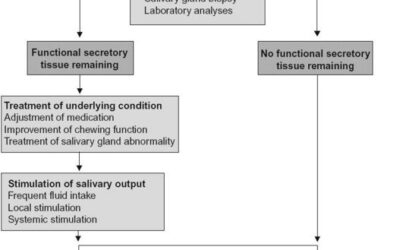
The management of dry mouth includes two aspects: attempts to affect a change in the causative factors of the condition; and, the prevention of any potential or worsening of existing consequences of dry mouth on oral health. Diagnosis Directed Management In order to...

Reducing Fear in Individuals with Chronic Low Back Pain

Reducing Fear in Individuals with Chronic Low Back Pain

According to the National Institutes of Health, around 80 percent of adults experience low back pain at some point. There are many reasons that they can experience the low back pain. Most people only have the low back pain for a short period of time, ranging from days...

How to Diagnose and Manage Fibromyalgia

How to Diagnose and Manage Fibromyalgia

How many people have heard this, or a similarly disempowering conclusion from their doctors? “Your pain is all in your head” “I think you’re just depressed” “We’ve done all of the tests, there’s nothing wrong with you” For most people with fibromyalgia (FM), it takes...

How to Treat Dry Mouth in Older Patients

How to Treat Dry Mouth in Older Patients

There are many diseases such as Xerostomia and Salivary Gland Hypofunction, radiation therapy in the head and neck area, and medications that cause dry mouth. In this article, we present several treatment options for older patients experiencing dry mouth. Sections...

New Treatments for Chronic Migraines are on the Horizon

New Treatments for Chronic Migraines are on the Horizon

Those who suffer from chronic migraines know all too well how debilitating the condition can be. Migraine headaches leave people in severe pain, often feeling nauseous and vomiting, and experiencing sensitivity to light and sound. It’s a condition that can leave...

Dry Mouth: Medications and their Effect on Saliva

Dry Mouth: Medications and their Effect on Saliva

By far, the most common cause of long standing dry mouth particularly in older adults is the use of xerogenic medications [30]. There are now projected to be over a thousand medications associated with subjective and/or objective oral dryness either by interfering...

Dental Erosion from Abrasion & Abfraction

Dental Erosion from Abrasion & Abfraction

What is dental abrasion? Unlike dental attrition, abrasion is the loss of tooth structure by mechanical forces from a foreign element. If this force begins at the cementoenamel junction, then the progression of tooth loss can be rapid since enamel is thin in this...

What is Dental Attrition?

What is Dental Attrition?

The definition of dental attrition is the mechanical wearing of the incisal or occlusal surfaces of teeth as a direct result of functional or parafunctional tooth-to-tooth contact. The process is usually slow and rarely results in pulpal disease as secondary dentine...

Pin It on Pinterest